


Sialkot: The City Where Pakistani Craftsmanship Reaches the World
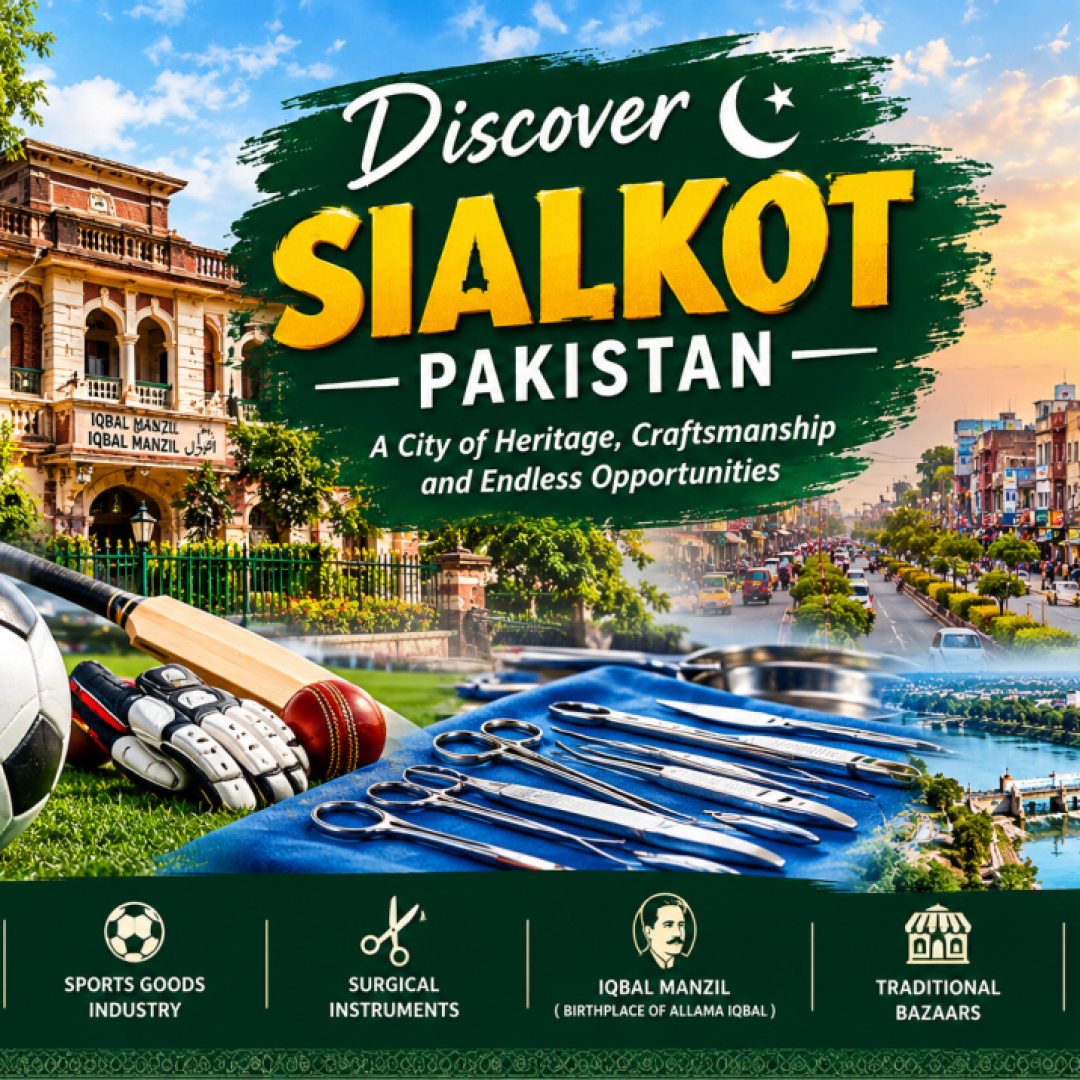
Discover Sialkot, Pakistan — a remarkable city of ancient heritage, world-class craftsmanship, literary brilliance, and entrepreneurial ambition.
*Category: Travel & Culture | Location: Punjab, Pakistan*
Introduction: A City with a Story in Every Street
Some cities are remembered for their magnificent buildings, some for their natural beauty, and others for the people who changed history. Sialkot brings all these qualities together in its own distinctive way.
Situated in the northeastern part of Punjab, Pakistan, Sialkot is a city where historic streets meet modern industries, traditional skills support international businesses, and generations of hardworking people continue to shape its identity.
To understand Sialkot, you must look beyond its busy markets and industrial workshops. Its real character lives in the hands of its craftspeople, the ambition of its entrepreneurs, the words of its poets, and the determination of its people.
This is not simply a city that produces goods. It is a city that turns local talent into products recognized across the world.
A Journey into Sialkot's Ancient Past
Sialkot possesses a long and fascinating history. Traditional accounts connect its early origins with Raja Sul and its later reconstruction with Raja Salivahana. The exact details of its earliest history belong partly to historical tradition, but the city's ancient roots remain an important part of its identity.
Over the centuries, Sialkot developed through changing kingdoms, trading networks, and cultural influences. Its location in the Punjab region helped connect communities, agricultural areas, and commercial routes.
The remains associated with Sialkot Fort offer a glimpse into the city's historical landscape. Although only limited remains survive today, they remind visitors that modern Sialkot stands upon layers of earlier life.
The city's history is not confined to old structures. It can also be discovered in its traditional bazaars, established neighborhoods, local customs, and the stories passed from one generation to another.
Sialkot: The City of Footballs and Sporting Excellence
Imagine a football travelling across a stadium during an international match. Behind that simple moment may lie the careful work of skilled hands in Sialkot.
The city has developed a remarkable reputation for manufacturing sporting equipment, including footballs, cricket gear, hockey sticks, boxing gloves, and sportswear. Its sports-goods industry grew significantly during the late nineteenth and early twentieth centuries.
What makes this achievement special is the combination of practical experience and specialized craftsmanship. Product design, material selection, stitching, finishing, and quality control all contribute to the manufacturing process.
Sialkot's sporting-goods businesses have built connections with international markets and helped establish Pakistan as an important name in sports manufacturing.
For the people working in this industry, a finished product represents more than a commercial order. It reflects years of accumulated knowledge, workshop experience, and the effort required to satisfy customers around the world.
The Surgical Instruments Industry: Precision Made in Pakistan
Another important part of Sialkot's industrial identity is its surgical-instruments industry.
The city and its surrounding industrial areas manufacture a wide variety of metal instruments and precision-engineered products for healthcare markets. This sector depends on technical skills, accurate finishing, reliable materials, and strict quality requirements.
Unlike products designed mainly for recreation, medical instruments must meet demanding safety and performance standards. Manufacturers serving international healthcare customers therefore need to pay particular attention to specifications, inspection, and applicable regulatory requirements.
The development of this industry demonstrates how traditional metalworking skills can evolve into specialized manufacturing.
Sialkot's workshops and businesses have helped create a strong local industrial network involving manufacturers, skilled workers, suppliers, and exporters. Together, they contribute to the city's reputation as an important production center.
Iqbal Manzil: Where a Great Literary Journey Began
Sialkot is not defined by industry alone. It is also the birthplace of Dr. Allama Muhammad Iqbal, one of the most influential poets and thinkers associated with the intellectual history of the Muslim world.
Iqbal Manzil, located in the historic part of the city, is the house associated with his birth and early life. Today, it serves as a museum and a place of cultural interest.
For admirers of Iqbal, visiting this historic home offers an opportunity to connect with the city that formed part of his early world.
Iqbal's poetry explored self-discovery, knowledge, courage, spiritual awareness, and the possibilities of human achievement. His ideas continue to inspire students, writers, and readers across Pakistan and beyond.
There is a special significance in the connection between Iqbal's intellectual legacy and Sialkot's modern industrial spirit: both are reminders that meaningful achievement begins with ideas, discipline, and a willingness to look beyond limitations.
Exploring Sialkot's Historic Streets and Landmarks
A visit to Sialkot can be as rewarding for a history enthusiast as it is for someone interested in business and industry.
Iqbal Manzil: A major cultural attraction associated with Allama Muhammad Iqbal. It is an excellent starting point for exploring the city's literary heritage.
Sialkot Clock Tower Located in the Saddar Bazaar area, the clock tower is a recognizable landmark amid the movement and activity of the city.
Sialkot Fort remains: These remnants provide a connection to the city's older historical landscape and are of interest to visitors curious about its past.
Historic bazaars: The older commercial areas offer an opportunity to observe everyday city life, explore traditional shops, and experience the local atmosphere.
Marala Headworks: Located near the Chenab River outside the central city, this area is associated with waterways, scenic surroundings, and outdoor visits. Travelers should check local access conditions before planning a trip.
Together, these places reveal different sides of Sialkot: its literary importance, urban development, historic character, and relationship with the surrounding landscape.
A Taste of Local Life and Punjabi Culture
The personality of Sialkot can also be experienced through its food, markets, family traditions, and social gatherings.
Punjabi cuisine is an important part of everyday life in the city. Traditional breads, grilled dishes, lentils, rice preparations, seasonal vegetables, and regional snacks form part of the wider culinary culture.
Local markets provide another window into the city's character. They bring together shopkeepers, craftspeople, families, students, and visitors in a lively urban environment.
Hospitality remains an important part of the experience many visitors associate with Pakistani culture. Sharing a meal, asking for directions, or exploring a neighborhood with a local guide can make a visit more memorable.
For travelers who want to experience Sialkot beyond its famous exports, these ordinary moments can be just as meaningful as its well-known landmarks.
The Business Spirit That Drives Sialkot Forward
Sialkot's economy is built on a strong tradition of private enterprise, technical knowledge, and export-oriented manufacturing.
Alongside sports goods and surgical instruments, businesses in and around the city produce leather products, gloves, textiles, sportswear, musical instruments, cutlery, and other manufactured goods.
One of the city's distinctive strengths is the way specialized businesses and skilled workers operate within interconnected production networks. Different stages of manufacturing can involve workshops, suppliers, finishing units, and exporters, each contributing expertise to the final product.
This industrial environment creates opportunities for employment, entrepreneurship, and international trade.
Sialkot International Airport has also provided an important transport link for the city's business community and surrounding export-oriented region.
Looking ahead, the city's continued success will depend on its ability to combine traditional skills with modern technology, workforce development, environmental responsibility, international quality standards, and new market opportunities.
Why Sialkot Deserves More Recognition as a Travel Destination
Many travelers first hear about Sialkot because of its sporting goods or because of Allama Iqbal. Yet the city offers a broader experience for visitors willing to explore it.
History enthusiasts can discover its cultural landmarks. Readers and students can learn about Iqbal's early life. Business travelers can explore the city's manufacturing heritage, while curious visitors can experience its bazaars and regional food.
Sialkot can also serve as a starting point for exploring parts of northeastern Punjab, depending on travel time, transport availability, and local conditions.
A thoughtful visit should leave room for both planned attractions and spontaneous discoveries. Sometimes a conversation with a shopkeeper or a walk through an older neighborhood reveals something that a list of famous places cannot capture.
Before traveling, visitors should confirm attraction opening hours, local transport options, and any relevant access restrictions.
The Challenges and Opportunities Ahead
Like other growing industrial cities, Sialkot faces the challenge of balancing economic progress with the needs of its residents.
Industrial expansion creates jobs and supports trade, but sustainable growth also requires attention to environmental protection, infrastructure, road congestion, worker welfare, and the development of modern skills.
Manufacturers can strengthen their future competitiveness through investment in technology, better production systems, product innovation, and responsible business practices.
Young people have opportunities to contribute through engineering, design, digital marketing, e-commerce, export management, and entrepreneurship.
The city's future will be shaped not only by the products it manufactures but also by how successfully it invests in people, innovation, and the quality of urban life.
Conclusion: Sialkot Is More Than a Name on a Product
Sialkot's story reaches far beyond the boundaries of one city.
Its sporting goods connect local workshops with international competitions. Its surgical instruments represent specialized manufacturing skills. Its historic streets preserve traces of earlier generations, while Iqbal Manzil keeps alive the memory of a thinker whose ideas continue to influence readers.
What brings these different stories together is the importance of human effort: the worker who perfects a difficult task, the entrepreneur who builds a business, the poet who challenges minds, and the young person who imagines a better future.
Sialkot reminds us that a city's reputation is not created overnight. It grows through knowledge, persistence, creativity, and the work of countless people.
Sialkot is a city where heritage meets industry, ideas meet ambition, and local craftsmanship finds its place in the wider world.**
If you are exploring Pakistan's remarkable cities, put Sialkot on your list. Its history, culture, and industrial achievements offer a story well worth discovering.
Frequently Asked Questions About Sialkot
Where is Sialkot located?
Sialkot is located in northeastern Punjab, Pakistan, near the international border with India.
What is Sialkot famous for?
Sialkot is particularly famous for sports goods, footballs, surgical instruments, leather products, gloves, and other export-oriented manufacturing industries.
Was Allama Iqbal born in Sialkot?
Yes. Dr. Allama Muhammad Iqbal was born in Sialkot in 1877. Iqbal Manzil is the historic house associated with his birthplace and early life.
What are the main places to visit in Sialkot?
Notable places include Iqbal Manzil, Sialkot Clock Tower, the remains of Sialkot Fort, historic bazaars, and the Marala Headworks area.
Why is Sialkot important to Pakistan's economy?
The city contributes to Pakistan's manufacturing and export economy through its sports goods, surgical instruments, leather goods, textiles, and related industries.What is the best way to experience Sialkot?
Explore its historic landmarks, learn about its manufacturing heritage, visit its traditional markets, and experience the local food and culture. Check travel arrangements and opening hours before your visit.
About This Article
This article presents Sialkot through an original narrative focused on its heritage, people, craftsmanship, and future. It is written for general readers, travelers, students, and anyone interested in Pakistan's cities.
Bolta Pakistan, one remarkable city at a time.*
Sialkot:The City Where Pakistani Craftsmanship Reaches the World
Comments
Login to comment.
Nice