


Introduction: A City That Carries Centuries in Its Heart
Some cities introduce themselves through towering buildings, busy shopping streets, or modern skylines. Multan tells its story differently. Its character unfolds through sunlit brick walls, centuries-old shrines, narrow traditional streets, fragrant bazaars, and the welcoming spirit of its people.
Situated in southern Punjab, Pakistan, Multan is one of the region’s most historically significant cities. Often associated with spirituality and Sufi traditions, it offers visitors a remarkable combination of history, architecture, food, craftsmanship, and everyday life.
Walking through Multan can feel like opening a book whose pages have been touched by generations. Every old gateway, decorated tomb, and bustling market offers another glimpse into the city’s remarkable past.
The Historical Soul of Multan
Multan’s history reaches back thousands of years. Its strategic position along historic trade routes helped it develop into an important centre of commerce, culture, and religious activity.
Over the centuries, different civilizations, rulers, and dynasties left their influence on the city. Their presence can still be explored through historic buildings, architectural details, and traditional neighbourhoods.
Rather than being preserved only in museums, Multan’s history remains part of daily life. Ancient monuments stand alongside shops, homes, and busy roads, creating a distinctive meeting point between the old world and the modern city.
For history enthusiasts, Multan is more than a destination on a map. It is a place where Pakistan’s cultural heritage can be experienced through real streets and living traditions.
The City of Saints and Spiritual Heritage
Multan is widely known as the City of Saints, a title connected with its long association with Sufi spirituality.
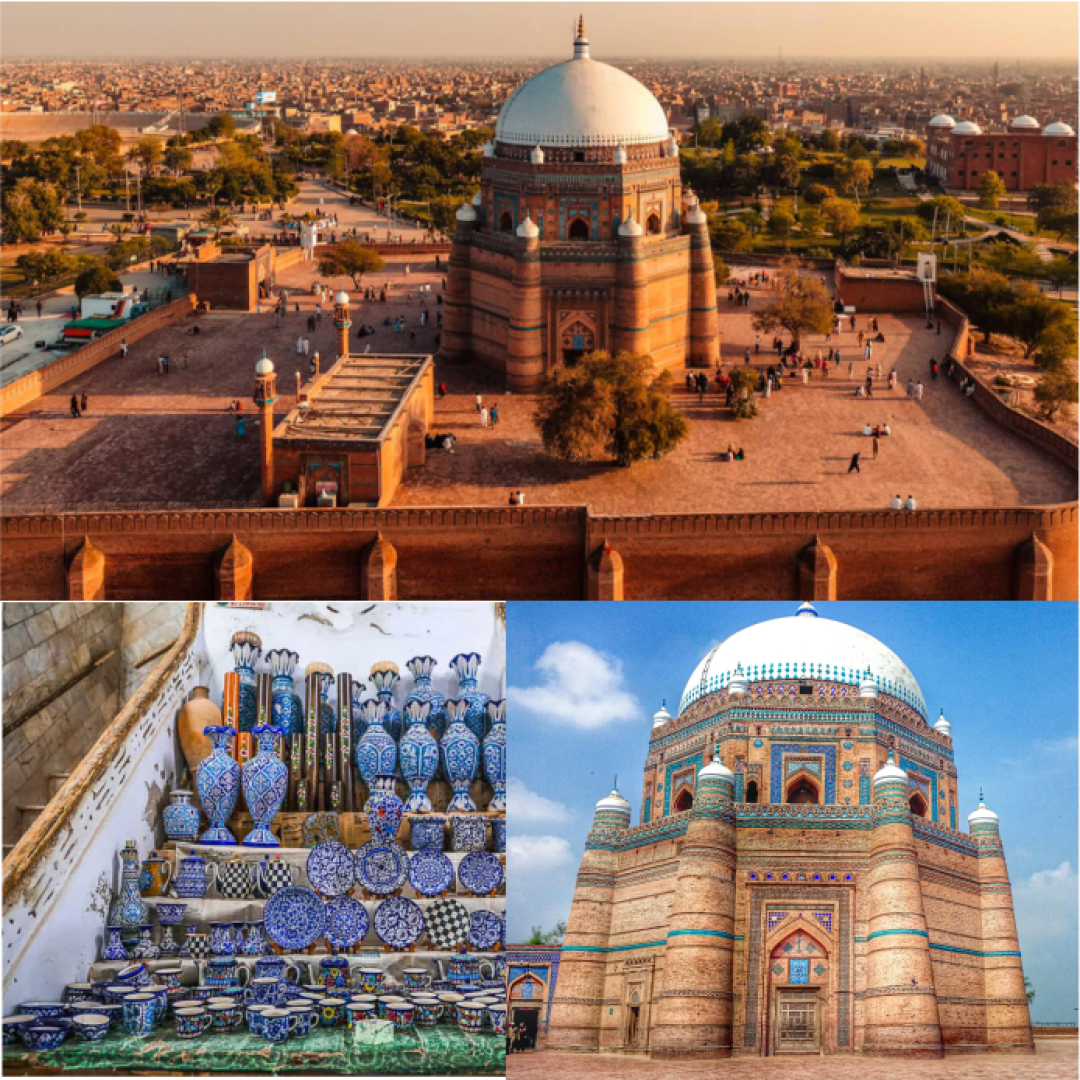
Among its best-known landmarks are the shrines of Hazrat Bahauddin Zakariya and Shah Rukn-e-Alam. These historic sites attract visitors, pilgrims, and architecture lovers throughout the year.
The shrine of Shah Rukn-e-Alam is especially admired for its impressive structure, distinctive dome, and carefully arranged brickwork. Its architectural presence gives the surrounding landscape a memorable character.
The spiritual atmosphere of Multan extends beyond its monuments. Visitors can observe people gathering for prayer, reflection, and expressions of devotion. These traditions form an important part of the city’s cultural identity.
Multan’s shrines are not simply historic structures. They are enduring symbols of faith, hospitality, and a spiritual tradition that has influenced generations.
Blue Tiles and the Beauty of Traditional Architecture
One of Multan’s most recognisable visual features is its decorative blue pottery and tilework.
Shades of turquoise, cobalt, and white appear in traditional designs inspired by flowers, geometric patterns, and centuries-old artistic influences. Against the warm colours of brick and desert-like landscapes, these cool blue tones create a striking contrast.
The city’s historic shrines demonstrate how craftsmanship can transform architecture into art. Intricate surfaces, carved details, and traditional building techniques reveal the skill of artisans who worked long before modern construction equipment existed.
Multan’s decorative traditions also survive in handmade pottery and other crafts. For visitors interested in art and design, these objects offer a meaningful way to appreciate the creativity of southern Punjab.
Multan’s Mangoes: A Taste of Summer
When summer arrives, Multan becomes closely associated with one of Pakistan’s favourite fruits: the mango.
The region is famous for mango varieties such as Chaunsa and Sindhri, although availability varies by season and growing area. Their sweet fragrance, juicy texture, and rich flavour make them a highlight of the local summer experience.
Mangoes are more than an agricultural product here. They are connected with family gatherings, seasonal celebrations, roadside fruit stalls, and the simple pleasure of sharing fresh fruit with guests.
During mango season, markets become colourful displays of carefully stacked fruit, and the scent of ripe mangoes fills many neighbourhoods.
For food lovers, experiencing Multan during the summer offers a delicious introduction to one of southern Punjab’s most celebrated agricultural traditions.
The Traditional Bazaars of Multan
Multan’s bazaars reveal another side of the city: energetic, colourful, and closely connected with everyday life.
Shoppers can explore traditional clothing, embroidered fabrics, jewellery, pottery, household goods, sweets, and locally made souvenirs. The atmosphere combines bargaining, friendly conversation, and the movement of merchants carrying on long-established trades.
The old commercial areas are especially interesting for visitors who want to understand the relationship between culture and commerce.
Traditional markets also provide opportunities to discover handcrafted items that reflect the artistic identity of the region. A carefully decorated pottery piece or embroidered textile can carry a stronger sense of place than a mass-produced souvenir.
For the best experience, explore at a comfortable pace, ask permission before photographing shopkeepers, and check prices before purchasing handmade goods.
The Flavours of Multani Cuisine
Food is an essential part of any journey through Multan.
The city offers a range of Punjabi and southern Punjab flavours, from traditional meat dishes and freshly prepared breads to spicy snacks, sweets, and refreshing drinks.
Visitors may encounter sajji-style preparations, kebabs, karahi dishes, halwa, and other regional favourites depending on the restaurant and season.
Multani Sohan Halwa deserves special attention. This rich traditional sweet is widely associated with the city and is popular as a gift for relatives, friends, and visitors returning home.
Food in Multan is often best enjoyed through the local experience: a busy food street, a family-run establishment, or a sweet shop where traditional recipes remain part of the business’s identity.
Places to Explore in Multan
If you are planning a visit, consider adding these landmarks and experiences to your itinerary.
1. Shrine of Shah Rukn-e-Alam
Admire one of Multan’s most celebrated historic monuments and its distinctive architectural design.
2. Shrine of Bahauddin Zakariya
Explore an important centre of Sufi heritage associated with the city’s spiritual history.
3. Multan Fort Area and Qasim Bagh
Discover the historic fort area and enjoy views of the surrounding city. Much of the original fortification was damaged or destroyed during historical conflicts, so visitors should distinguish surviving landmarks from the former fort itself.
4. Hussain Agahi Bazaar
Experience a traditional commercial district known for its lively atmosphere and wide range of local goods.
5. Traditional Blue Pottery Shops
Look for handcrafted pottery and decorative pieces inspired by Multan’s famous blue-and-white artistic traditions.
6. Multan’s Historic Gates and Old Streets
Explore surviving historic gateways and traditional urban areas to appreciate how the older city developed around its commercial and residential life.
Opening arrangements, access restrictions, and visiting conditions can change, so check locally before travelling to individual sites.
The People and Culture of Multan
The warmth of a city often becomes most apparent through its people.
In Multan, Punjabi and Saraiki cultural influences contribute to a rich regional identity. Languages, clothing, music, poetry, food, and hospitality all help express the character of southern Punjab.
Traditional gatherings, family celebrations, folk performances, and local craftsmanship continue to connect communities with their heritage.
Visitors may notice that hospitality is expressed through small gestures: offering refreshments, helping someone find a street, or recommending a local speciality.
These everyday interactions can become just as memorable as the city’s historic monuments.
Multan in the Modern Age
Although Multan is deeply connected with its past, it is also a growing modern city.
Educational institutions, hospitals, businesses, shopping centres, transport links, and expanding residential areas serve a large population across southern Punjab. The city plays an important role in regional trade, agriculture, and access to public services.
Modern development has changed the urban landscape, but historic neighbourhoods and traditional markets continue to preserve elements of its older identity.
This coexistence is one of Multan’s most interesting qualities. A visitor can spend the morning exploring a historic shrine and the afternoon discovering contemporary restaurants, shopping areas, and modern city life.
The Best Time to Visit Multan
Multan experiences very hot summers, with temperatures that can become uncomfortable for outdoor sightseeing.
October to March is generally a more comfortable period for exploring historic sites and walking through traditional markets. Winter mornings and pleasant afternoons can make cultural visits more enjoyable.
Summer has its own attraction because of the mango season, but travellers should prepare for intense heat, drink sufficient water, and plan outdoor activities for the cooler parts of the day.
Before travelling, check the weather forecast and confirm transport and accommodation arrangements.
Practical Travel Tips for Visitors
Dress comfortably: Choose lightweight clothing suited to the weather, while dressing respectfully when visiting religious sites.
Carry water: Heat can be intense, particularly during late spring and summer.
Respect local customs: Follow photography rules and any instructions at shrines and other religious locations.
Explore local food: Try regional sweets and traditional dishes from reputable, hygienic establishments.
Support local artisans: Consider purchasing authentic pottery, embroidery, and other handmade products.
Plan your transport: Check local traffic conditions and travel times between attractions before arranging your day.
Keep some cash: Smaller shops and traditional market stalls may not accept digital payments.
Why Multan Deserves a Place on Your Travel List
Multan offers an experience that cannot be reduced to a single attraction. Its appeal comes from the relationship between history, spirituality, traditional art, food, and the everyday rhythm of southern Punjab.
It is a city where ancient brickwork meets busy commercial streets, where blue pottery reflects generations of artistic skill, and where summer brings the unmistakable sweetness of locally celebrated mangoes.
Whether you are interested in heritage, architecture, photography, shopping, or regional cuisine, Multan offers plenty of opportunities to discover something meaningful.
Conclusion: Multan, A Living Story of Southern Punjab
Multan is not merely a city that remembers its past; it is a place where that past continues to influence the present.
Its shrines preserve spiritual traditions, its bazaars sustain local commerce, its artisans carry forward decorative crafts, and its food reflects the generosity of regional culture.
For anyone exploring Pakistan, Multan offers a distinctive journey into the heritage of southern Punjab. Visit with curiosity, take time to explore its historic streets, taste its local specialities, and appreciate the traditions that give the city its character.
Multan leaves its strongest impression not through one monument or one flavour, but through the many small discoveries that gradually reveal the soul of the city.
Multan ; The City Where Ancient Stories Meet the Warmth of Southern Punjab
Comments
Login to comment.
Nice